



















Commercial Bar Fridge Buying Guide
How to choose a commercial bar fridge — undercounter, freestanding or upright, standard or stainless finish, hinged or sliding — with real capacities, dimensions and the one spec that decides whether it copes with the heat where it's going.
Not sure which suits your space? Call us on 03 9783 6325.
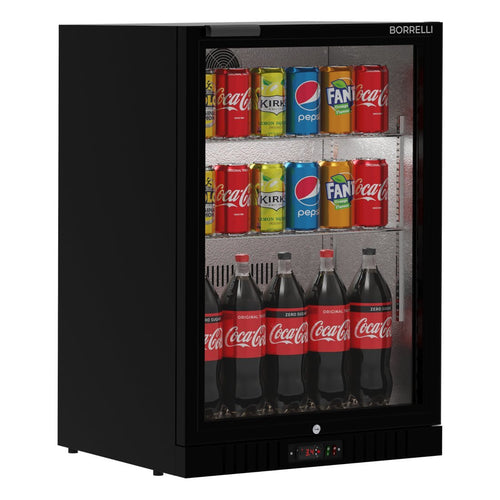


A bar fridge is one of the few pieces of equipment that runs every hour you're open and most of the hours you're not. In a café or bar, the wrong one costs you drink sales and an early compressor. At home — in a man cave, garage, alfresco area or home bar — the wrong one is a unit that can't cope with a hot shed over summer, or won't fit where you planned it. Same fridge, same decisions, and this guide covers both.
Plenty of our bar fridge customers aren't businesses at all — they're kitting out an entertainment area, a garage, a pool house or a home bar and they want the same commercial-grade unit a venue would buy, because it's built to last and it actually keeps drinks cold in an Australian summer. Every number here is from our own range.
Undercounter, freestanding or upright?
Start here, because it rules out most of the range in one decision. Our bar fridges come in three heights, and the height decides where the fridge can go.
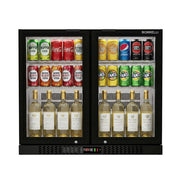
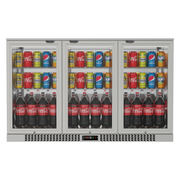
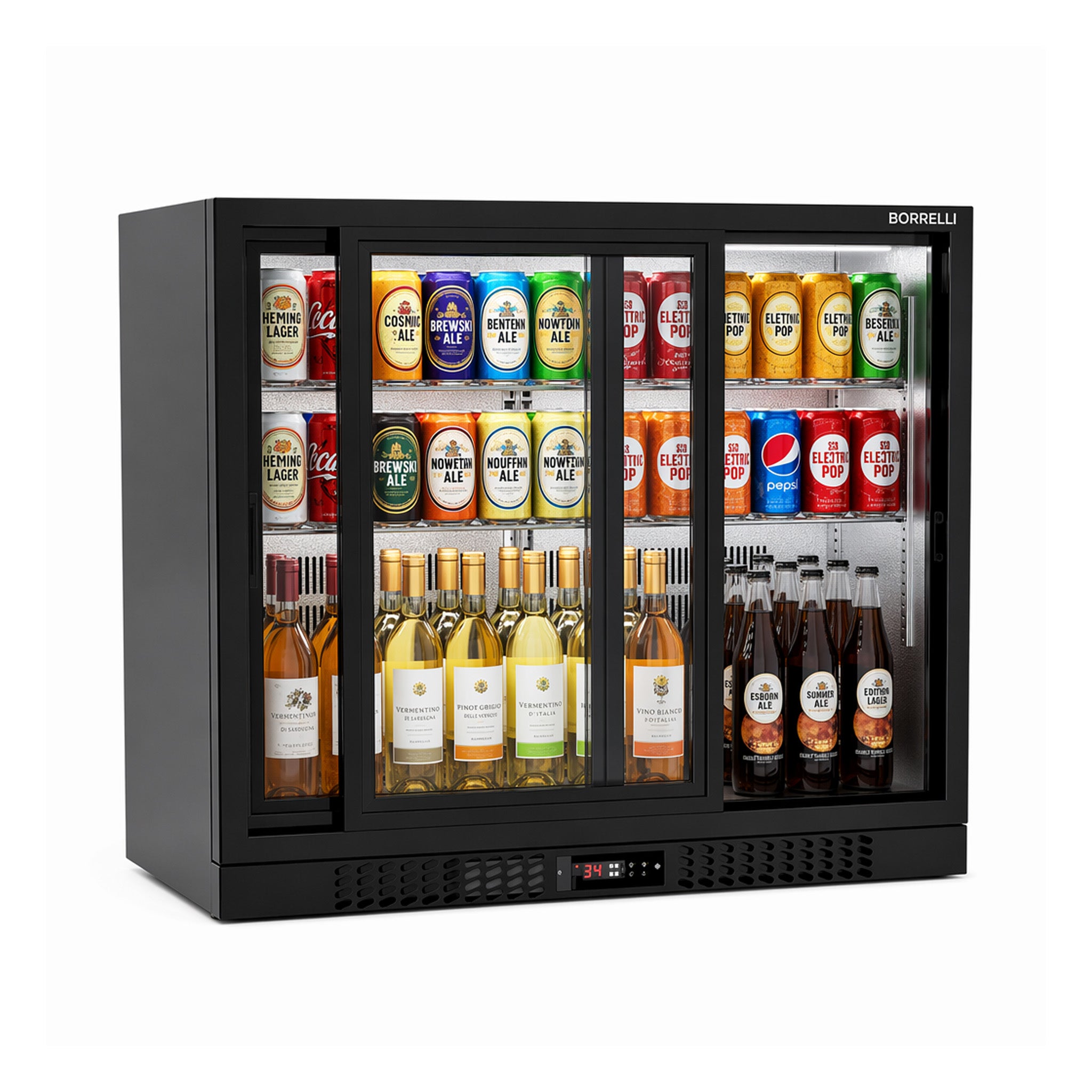
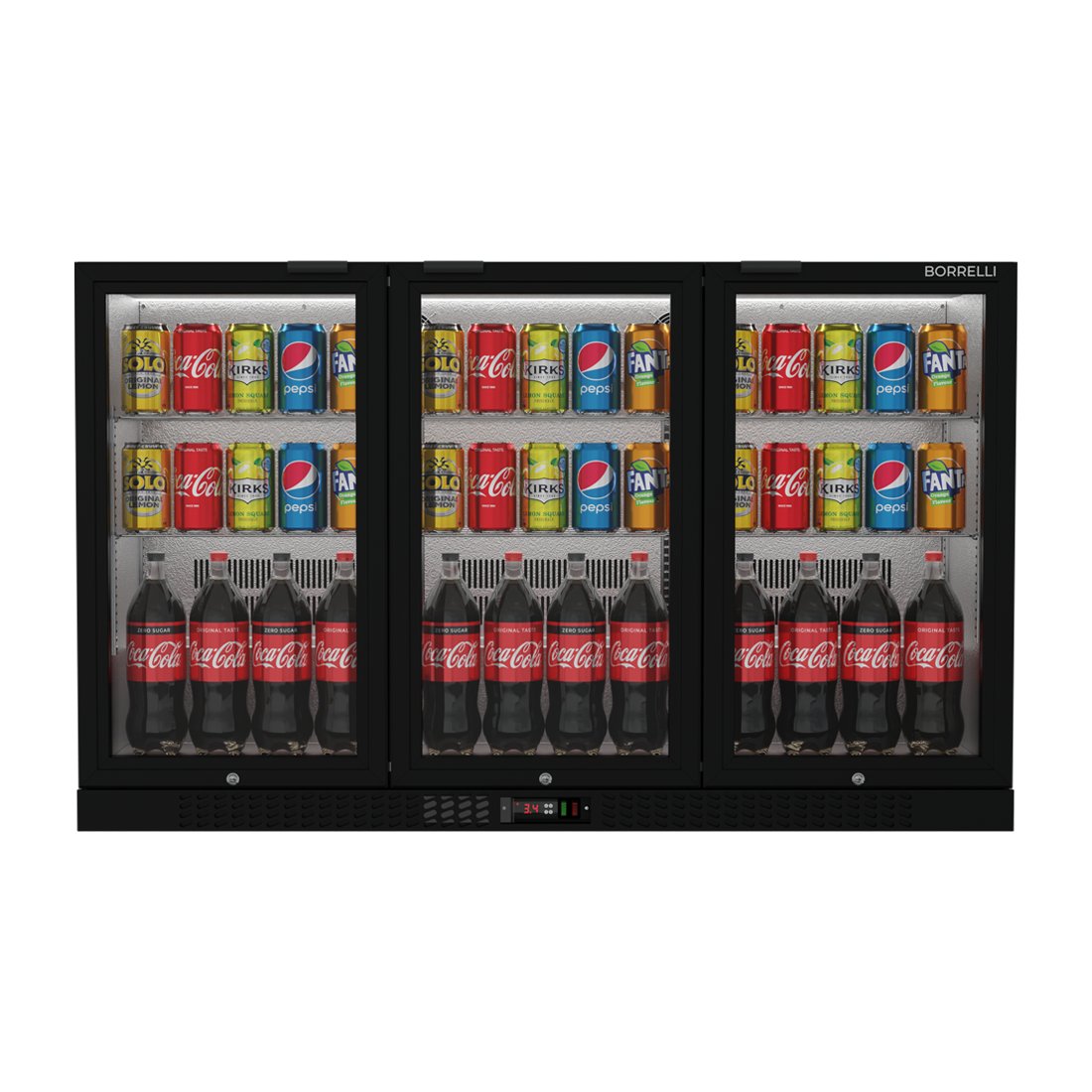
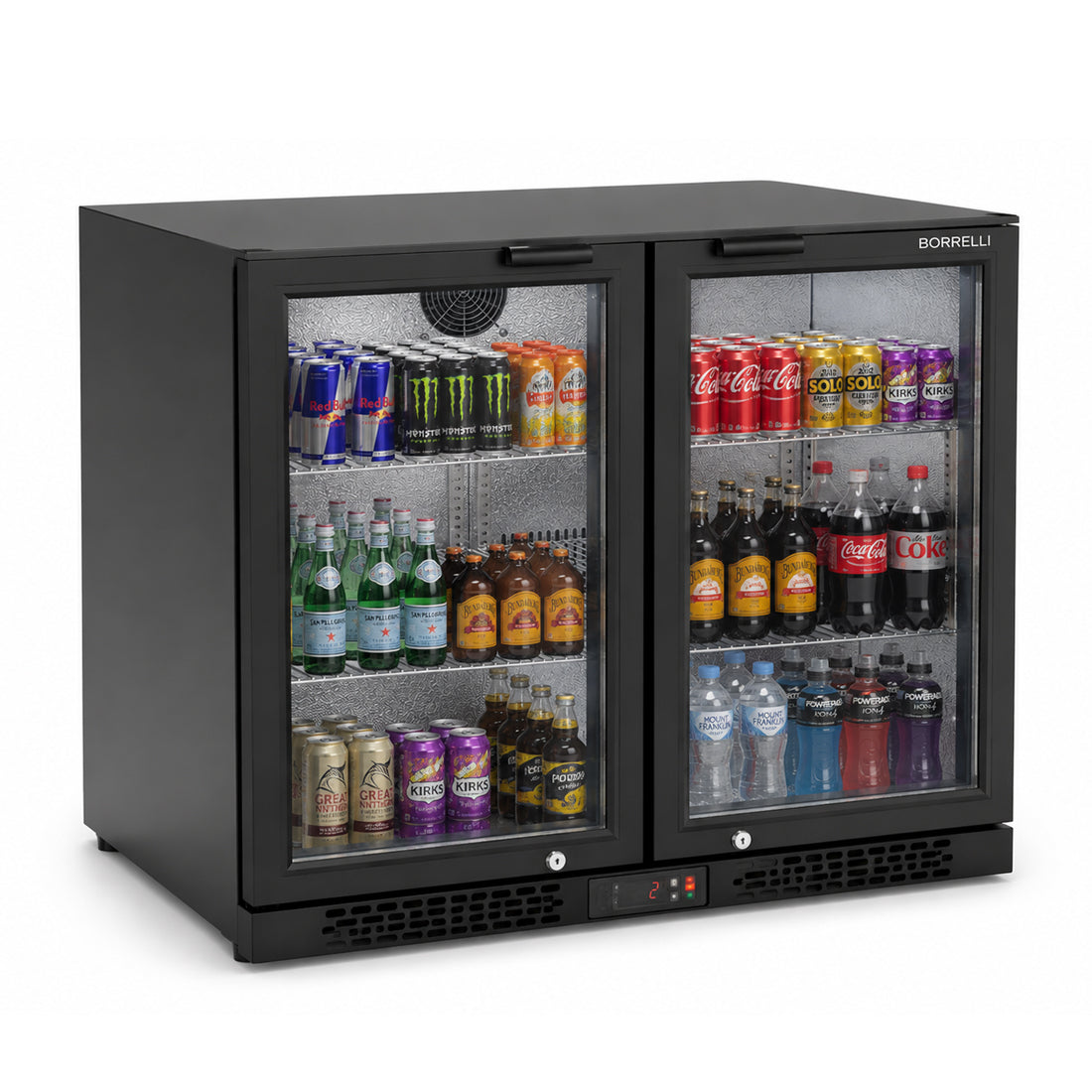
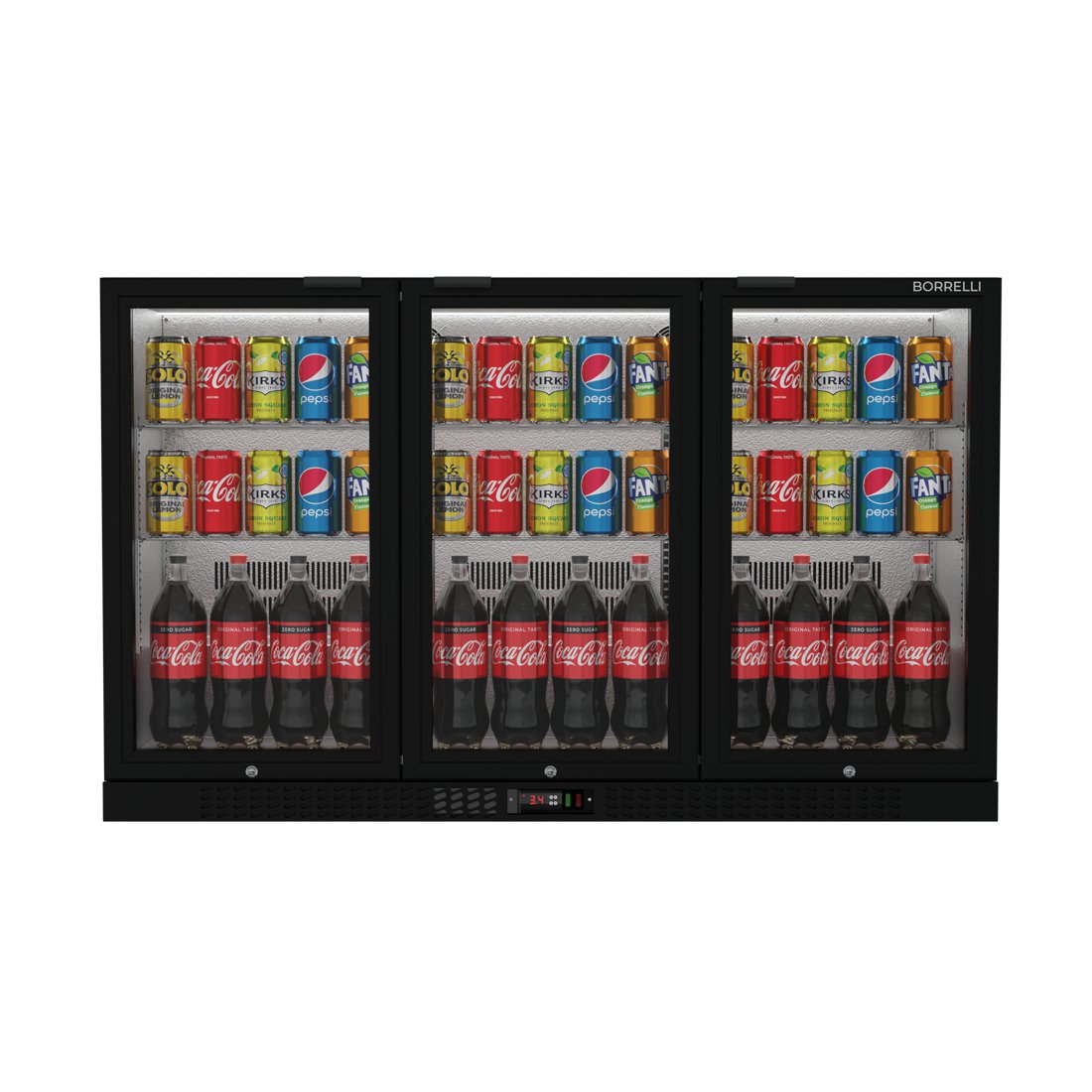
Undercounter — 845mm high. Built specifically to fit under a standard commercial bench. A bench is about 900mm high, so an 845mm cabinet slides beneath it with room for the benchtop, turning dead space under the counter into cold storage. If your plan is a fridge tucked under the bar, this is the group — and the 845mm height is the number that matters. Available 1, 2 and 3 door (121L, 188L, 293L).
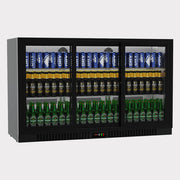
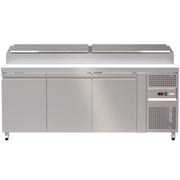
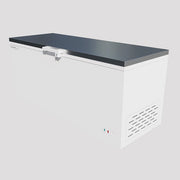
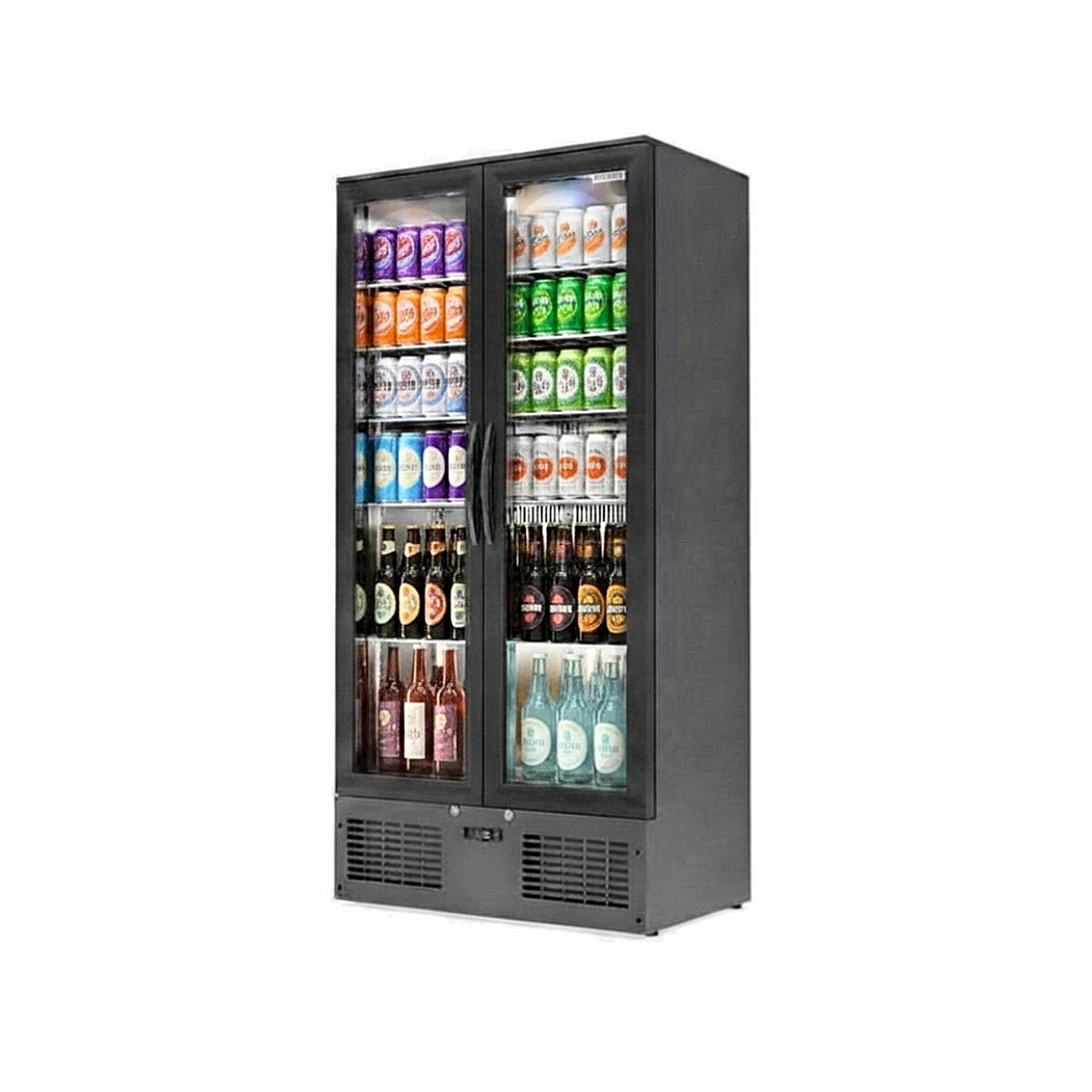
Freestanding — 900mm high. Same footprint and door options, but 900mm tall — bench height, so it won't go under a standard counter. It's made to stand on its own: at the end of a bar run, against a wall, or as a serving point. Available 1, 2 and 3 door (130L, 207L, 324L).
This is the one people get wrong. If you need it to fit under a bench, you want the 845mm undercounter — not a 900mm freestanding.
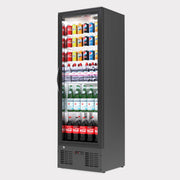
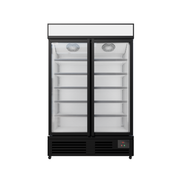
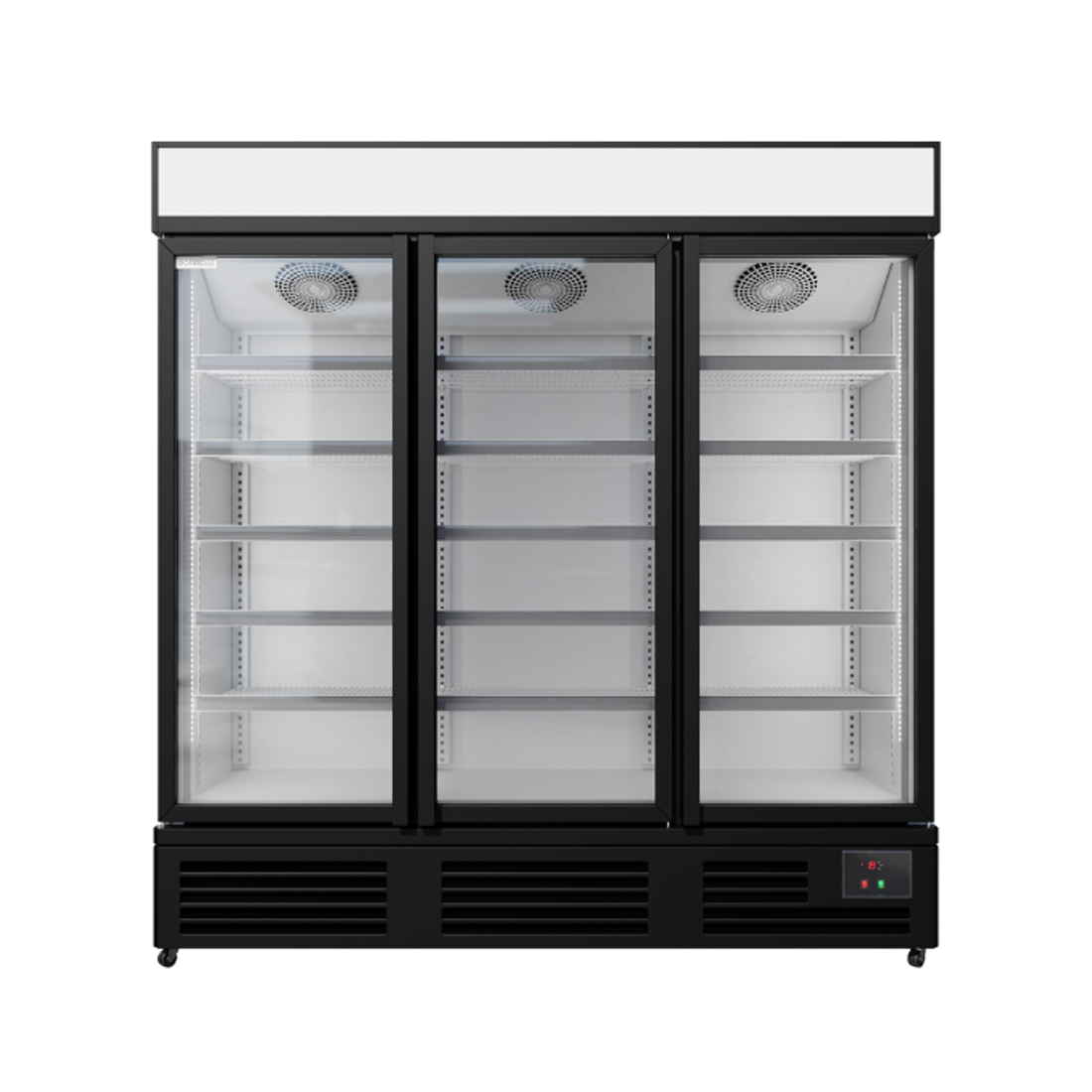
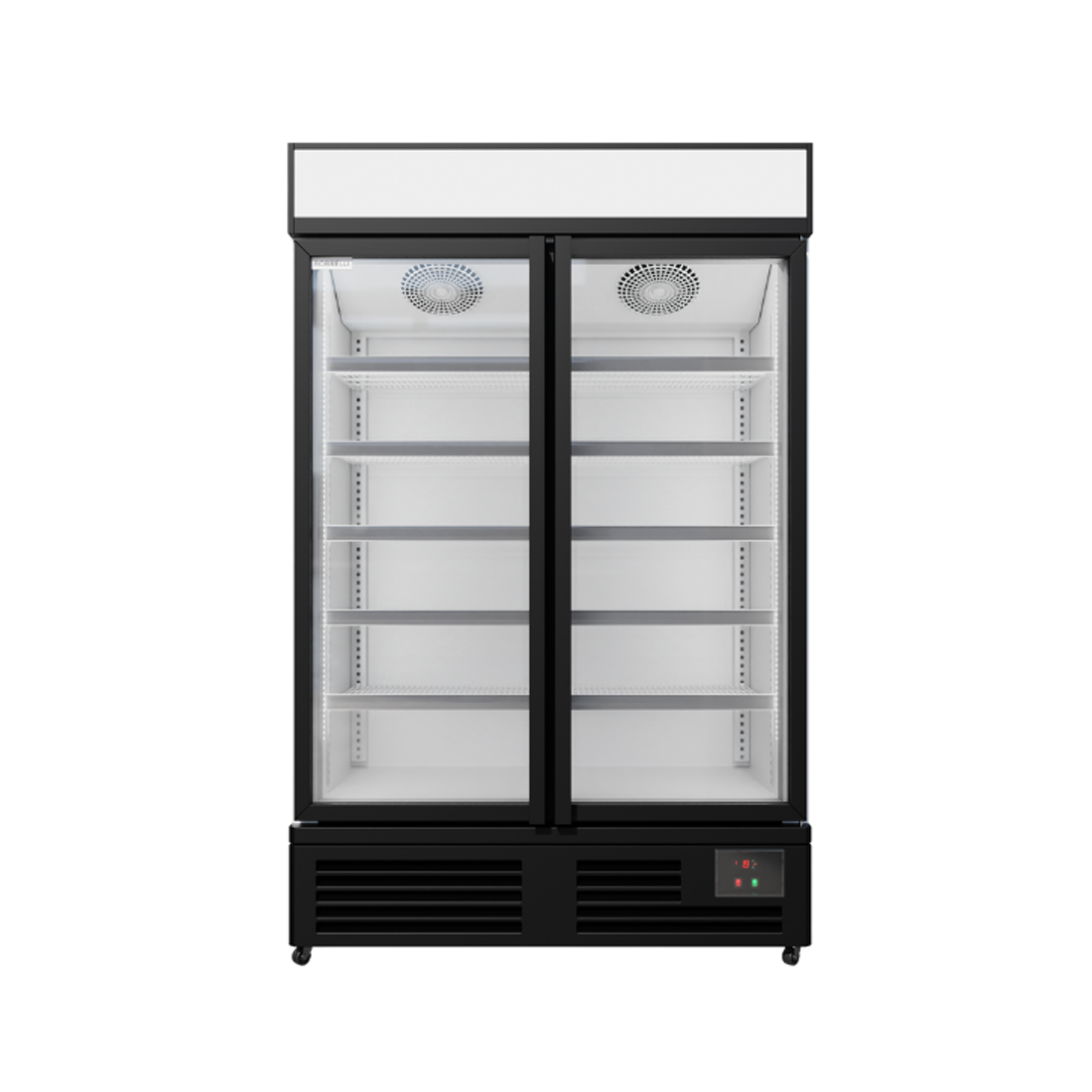
Upright — 1820–2030mm high. A full-height cabinet. It holds three to five times the stock of an undercounter of the same footprint and puts everything at eye level, but it needs a wall, not a counter, and the big ones are heavy.
A useful rule: drinks served from the unit during service → undercounter or freestanding. Back-of-house restocking storage → upright, and buy the capacity.
Size — with real numbers
Bottle figures are approximate and given as a range — actual capacity depends on bottle size and how you pack the shelves. We quote stubbies (375ml) because that's how most Australian venues think about bar stock; cans pack roughly 40% denser again.
Undercounter — 845mm high (fits under a standard bench)
| Model | Capacity | Width | Height | Approx. stubbies | Suits |
|---|---|---|---|---|---|
| BC-130B1 door, hinged | 121 L | 600mm | 845mm | 70–85 | Small café, coffee cart, office |
| BC-210HB2 door, hinged | 188 L | 900mm | 845mm | 105–130 | Café, restaurant, small bar |
| BC-210SB2 door, sliding | 188 L | 900mm | 845mm | 105–130 | Same size — sliding for tight walkways |
| BC-320HB3 door, hinged | 293 L | 1350mm | 845mm | 165–205 | Busy bar, pub, function space |
| BC-320SB3 door, sliding | 293 L | 1350mm | 845mm | 165–205 | Same size — sliding for tight walkways |
Freestanding — 900mm high (bench height, stands alone)
| Model | Capacity | Width | Height | Approx. stubbies | Suits |
|---|---|---|---|---|---|
| BC-1301 door, hinged | 133 L | 600mm | 900mm | 75–90 | Café, back bar — or a home bar / man cave |
| BC-210H2 door, hinged | 207 L | 900mm | 900mm | 115–145 | Café, small bar — or a garage / entertainment area |
| BC-210S2 door, sliding | 207 L | 900mm | 900mm | 115–145 | Same size — sliding for tight walkways |
| BC-320H3 door, hinged | 324 L | 1350mm | 900mm | 185–225 | Busy bar, pub — or a serious home bar / alfresco |
| BC-320S3 door, sliding | 324 L | 1350mm | 900mm | 185–225 | Same size — sliding for tight walkways |
Upright — 1820–2030mm high
| Model | Capacity | Width | Height | Approx. stubbies | Suits |
|---|---|---|---|---|---|
| BC-310U / BC-4001 door, hinged | 299–310 L | 600–610mm | 1820–2000mm | 170–215 | Back-of-house top-up storage |
| BC-510U2 door, hinged | 477 L | 900mm | 1825mm | 270–335 | Mid-size venue bulk storage |
| BC-800H2 door, hinged | 675 L | 1000mm | 2030mm | 380–475 | High-volume bar |
| BC-1000H2 door, hinged | 758 L | 1140mm | 2030mm | 430–530 | Hotel, club, function venue |
| BC-1500H3 door, hinged | 1242 L | 1710mm | 2030mm | 700–870 | Largest venues, central store |
Stainless steel finish — 900mm high (glass door)
The freestanding sizes with a stainless-steel exterior instead of matt black — same glass door and capacity. Deluxe adds a mirror-finish interior.
| Model | Capacity | Width | Height | Approx. stubbies | Suits |
|---|---|---|---|---|---|
| BC-130-SS1 door, hinged | 133 L | 600mm | 900mm | 75–90 | Stainless, standard interior |
| BC-130-SS-DX1 door, hinged | 133 L | 600mm | 900mm | 75–90 | Stainless, mirror-finish interior |
| BC-210H-SS2 door, hinged | 207 L | 900mm | 900mm | 115–145 | Stainless, standard interior |
| BC-210H-SS-DX2 door, hinged | 207 L | 900mm | 900mm | 115–145 | Stainless, mirror-finish interior |
| BC-320H-SS3 door, hinged | 324 L | 1350mm | 900mm | 185–225 | Stainless, standard interior |
| BC-320H-SS-DX3 door, hinged | 324 L | 1350mm | 900mm | 185–225 | Stainless, mirror-finish interior |
When you're stuck between two sizes, go with the bigger one. The mistake we see most often is a fridge that turns out too small — if you're restocking it mid-service on a busy night, you've already outgrown it. A fridge with a little spare room never causes that problem. For example, the 3-door is only about 450mm wider than the 2-door but holds a lot more, so unless space is genuinely tight, size up.
Will it actually fit?
This is where a purchase goes wrong after the money's spent, so measure twice. These are the cabinet's own external dimensions, out of the box — which is what has to physically pass through your doorways, not the packaged size.
| Model | Width | Depth | Height |
|---|---|---|---|
| Undercounter 1 door | 600mm | 530mm | 845mm |
| Undercounter 2 door | 900mm | 530mm | 845mm |
| Undercounter 3 door | 1350mm | 530mm | 845mm |
| BC-130 (1 door freestanding) | 600mm | 520mm | 900mm |
| BC-210 (2 door freestanding) | 900mm | 520mm | 900mm |
| BC-320 (3 door freestanding) | 1350mm | 520mm | 900mm |
| BC-310U (1 door upright) | 600mm | 530mm | 1820mm |
| BC-400 (1 door upright) | 610mm | 670mm | 2000mm |
| BC-510U (2 door upright) | 900mm | 525mm | 1825mm |
| BC-800H (2 door upright) | 1000mm | 780mm | 2030mm |
| BC-1000H (2 door upright) | 1140mm | 780mm | 2030mm |
| BC-1500H (3 door upright) | 1710mm | 780mm | 2030mm |
Doorways
When you wheel a fridge through a door, it's the depth that leads, not the width — so a 900mm-wide BC-210 turns and goes through a standard 820mm doorway on its 520mm depth without trouble. The undercounter and freestanding models all clear a normal doorway.
The tall uprights need planning. BC-800H, BC-1000H and BC-1500H are 780mm deep, so they'll pass an 820mm doorway with only about 20mm to spare on each side (820 − 780 = 40mm total, split between both sides) — and the clear opening of a fitted door is usually a little less than its nominal width, so treat that as tight. At 2030mm tall they're also within about 10mm of a standard 2040mm door height.
If a doorway is too tight to wheel the fridge through standing up, you can lay it on its back to get it through — that's normal practice and fine for short periods. The one rule that matters: stand it upright again and leave it standing for 12 hours before you switch it on, so the refrigerant and compressor oil settle back into place. Powering up a fridge that's just been lying down is the quickest way to damage the compressor. So long as you give it that 12 hours, laying it down to move it does no harm.
Weight
These are not two-person lifts by the time you're at the top: BC-1000H is 149kg, BC-1500H is 215kg. Our delivery is kerbside, so getting it inside is your side of the line — for a first-floor venue or anything with stairs, plan the lift before the fridge arrives.
Clearance for airflow
A commercial fridge breathes. Starve it of air and it runs hot, uses more power and fails early — and running it boxed-in can void the warranty. The Borrelli install manual specifies:
- 20mm above
- 20mm each side
- 20mm at the front
- 100mm behind the cabinet
Always check the install sheet for your specific model.
Finish — standard or stainless steel?
Every Borrelli bar fridge is a glass-door fridge, so they all display the drinks. The choice here is the exterior finish, not the door.
Standard (matt black) — the default. A clean black cabinet that sits quietly behind most bars, and it's the more affordable option.
Stainless steel — a durable, wipe-clean exterior that looks the part in a visible bar or a stainless kitchen line and shrugs off knocks in a busy service area. Same glass door, same capacity as the standard model — you're paying for the finish, not a different fridge.
The stainless models — standard and Deluxe (which adds a mirror-finish interior) — are listed in the size charts above.
Hinged or sliding doors?
More important than it sounds, because it's about the space in front of the fridge, not the fridge itself.
Hinged gives you the full opening — easier to load cartons, easier to clean, and the door self-closes. It needs swing room. Behind a bar with a bartender working the aisle, a swinging door is a nuisance and a bruise.
Sliding doesn't intrude into the walkway at all, which is why it's the default for busy bars and narrow service areas. The trade-off is that you only ever have half the cabinet open at once, and the tracks need occasional cleaning.
Rule of thumb: narrow walkway or busy service line → sliding. Storage where you load boxes → hinged.
Ambient temperature — the one everyone misses
This is the number that separates a fridge that lasts eight years from one that dies in eighteen months, and almost no competitor mentions it.
Every fridge has a maximum ambient temperature — the hottest room it can still hold temperature in. Put a unit rated to only 25°C, as plenty of budget imports are, in a kitchen that hits 35°C over a summer service and it simply can't keep up: the compressor runs flat out, the drinks never get cold, and you're looking at a warranty claim that isn't actually a fault.
Here's where Borrelli stands apart: every bar fridge in the range is rated to a 38°C maximum ambient — the whole line-up, from the compact BC-130 to the big three-door BC-1500H upright. Any of them will hold temperature in a hot Australian kitchen or an unconditioned room, so you never have to trade capacity for climate tolerance or check a spec sheet to be sure the model you want can cope where it's going.
This matters just as much at home — arguably more. A garage, shed or uninsulated alfresco area in an Australian summer can climb past 40°C, hotter than most commercial kitchens. It's the number one reason a cheap bar fridge "stops working" in a garage — it isn't broken, it's a 25°C-rated import asked to do a job it was never built for. Every Borrelli bar fridge is rated to 38°C, so it handles the heat far better; in a spot that genuinely bakes beyond that, keep it out of direct sun and give it room to breathe (see the clearances above) and it'll hold up.
If you're not sure how hot your space gets, tell us where the fridge is going and we'll talk it through — but with the entire range rated to 38°C, you're covered for almost any Australian setting, at home or in a venue. This is the single most common reason a bar fridge underperforms, and with Borrelli it's simply handled.
Features that earn their place
Not every feature is worth paying for. These are:
- Fan-forced cooling — even temperature top to bottom. Standard across our range.
- Digital temperature control — set and read the exact temperature, not a 1–7 dial.
- Lockable doors — matters more than people expect for a fridge holding spirits.
- LED interior lighting — cheaper to run than fluorescent and doesn't add heat.
- Adjustable shelves, rated to 25kg each — fit tall bottles and short cans in the same cabinet, and load a shelf with a full case without worrying about it. (25kg is the manufacturer's rating across the range.)
- Castors on the uprights — a 149kg fridge you can roll out to clean behind.
Warranty
Every Borrelli bar fridge comes with a two-year onsite parts and labour warranty — a technician comes to you, you don't ship a fridge back. See the product page for the current terms. The warranty assumes the ventilation clearances above and operation within the unit's ambient rating, which is one more reason to get sections 3 and 6 right.
Frequently asked questions
What size commercial bar fridge do I need?
Will a bar fridge fit under my counter?
Standard or stainless steel finish?
Does it need special ventilation?
Can it handle a hot kitchen or a garage?
Once submitted, we will email you promptly.