



















Commercial Pizza Oven Buying Guide
Commercial Pizza Oven Buying Guide
Deck or conveyor? How to choose a commercial pizza oven for your crust and your volume.
Not sure which suits you? Call us on 03 9783 6325.


A pizza oven is bought on one big decision — deck or conveyor — and then how many pizzas an hour you need. Choose the wrong type and you either can't keep up at peak, or you've bought a machine that flattens the craft you're selling. This guide settles it.
Every figure here is from our own range.
Deck oven or conveyor?
- Deck oven — pizzas cook directly on a hot stone or refractory base inside a chamber. It gives the crust and char of a traditional pizzeria, and it's what you want if the pizza is the product. It needs a bit of skill — the operator manages placement and timing — and comes as single or twin deck.
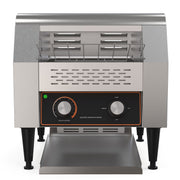
- Conveyor oven — pizzas ride a belt through a heated tunnel and come out the other end, cooked to a set time and temperature. Consistent, high-volume, and needs almost no skill — ideal for a busy takeaway, a franchise, a pub kitchen or anywhere throughput and consistency beat artisan crust.
Quick sort: craft pizzeria, quality crust → deck. High volume, consistency, minimal skill → conveyor.
Deck ovens — single or twin?
- Single deck — one chamber, around 4 × 12″ pizzas at a time. Cafés, small pizzerias, moderate volume.
- Twin deck — two stacked chambers, around 8 × 12″ pizzas, doubling output in the same footprint. Busy pizzerias.
Both are available with a stone / refractory base, which holds and radiates heat into the base of the pizza for a proper crisp crust — the reason a deck oven beats a domestic oven for pizza.
The range — models
Deck ovens for crust quality, a conveyor for continuous volume. Tap a model for live pricing, full specs and stock.
| Model | Type | Capacity | Notes |
|---|---|---|---|
| PIZ-SD450 | Deck — single | 4 × 12″ | Café / small pizzeria |
| PIZ-TD450 | Deck — twin | 8 × 12″ | Busy pizzeria, double output |
| BOR-SDPOAS | Deck — single | Single chamber | Stone / refractory chamber |
| BOR-CSDOAS | Deck — compact | Compact chamber | Stone chamber, small footprint |
| PIZ-CON | Conveyor | Continuous belt | High volume, set-and-forget |
Match to your peak: count the pizzas you need out the door in your busiest hour, not your average.
What to look for
- Stone / refractory base — for crust quality on a deck oven; the whole point of buying one.
- Independent top and base heat (deck) — lets you balance a crisp base against a cooked top.
- Belt speed control (conveyor) — sets the bake time for consistency across a shift.
- Insulation and outer temperature — a well-insulated oven wastes less heat into a hot kitchen.
- Ventilation — pizza ovens run hot; plan extraction and clearance.
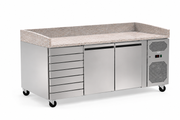
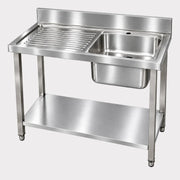
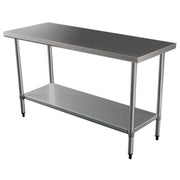
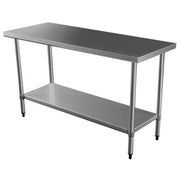
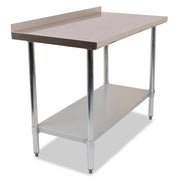
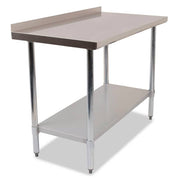
- A stand or bench — deck ovens are often mounted on a matching stand or a stainless bench at working height.
Frequently asked questions
Deck oven or conveyor?
How many pizzas can it cook at once?
Do I need a stone base?
Can I make pizza dough as well?
Once submitted, we will email you promptly.